Introduction
PFAS-resolve is a groundbreaking Interreg Meuse–Rhine project running from
1 June 2024 to 31 May 2027. It brings together scientists, engineers, and public health experts from
Belgium, the Netherlands, and Germany to develop
rapid, portable detection tools for PFAS — persistent “forever chemicals” such as
PFOS, PFOA, and PFNA that contaminate soil and water, resist natural degradation, and pose serious risks to human health and the environment.
While conventional laboratory analyses provide high accuracy, they are often
slow and costly. PFAS-resolve addresses this challenge by reducing detection times from
weeks to minutes, enabling faster contamination mapping and more effective remediation planning. The project combines an
advanced portable biosensor, capable of detecting ultra-low PFAS concentrations in real time, with
phytoscreening techniques that use plants as natural indicators of contamination. This approach bridges precision science with
practical, field-ready solutions.
Partner expertise and contributions
The consortium includes organizations from the Netherlands, Belgium, and Germany, each contributing specific expertise to ensure smooth and effective project implementation:
- Maastricht University (Netherlands): Leads sensor development, overall project coordination, and international cooperation
- Bio2Clean B.V. (Belgium): Focuses on phytoscreening approaches and sustainable soil remediation
- Geonius Groep B.V. (Netherlands): Provides expertise in environmental engineering and geosciences
- Université de Liège (Belgium) and FH Aachen – University of Applied Sciences (Germany): Develop sensor-based detection and monitoring technologies
- SPAQUE (Belgium): Public-sector operator specializing in soil remediation and brownfield redevelopment, with strong expertise in contaminated site identification and cleanup
- Hygiene Institute of the Ruhr Area (Germany): Conducts site sampling and chemical analyses and leads benchmarking of detection and monitoring methods
Together, this interdisciplinary team covers the entire process from
detection and assessment of PFAS contamination to
remediation implementation, environmental monitoring, and verification.
ContactFor more information, please contact:
Bart van GrinsvenUniversität Maastricht
E-MailThomas-Benjamin SeilerHygiene-Institut des Ruhrgebiets
E-MailFunding acknowledgementThe PFAS-resolve project is co-funded by the
European Union under the
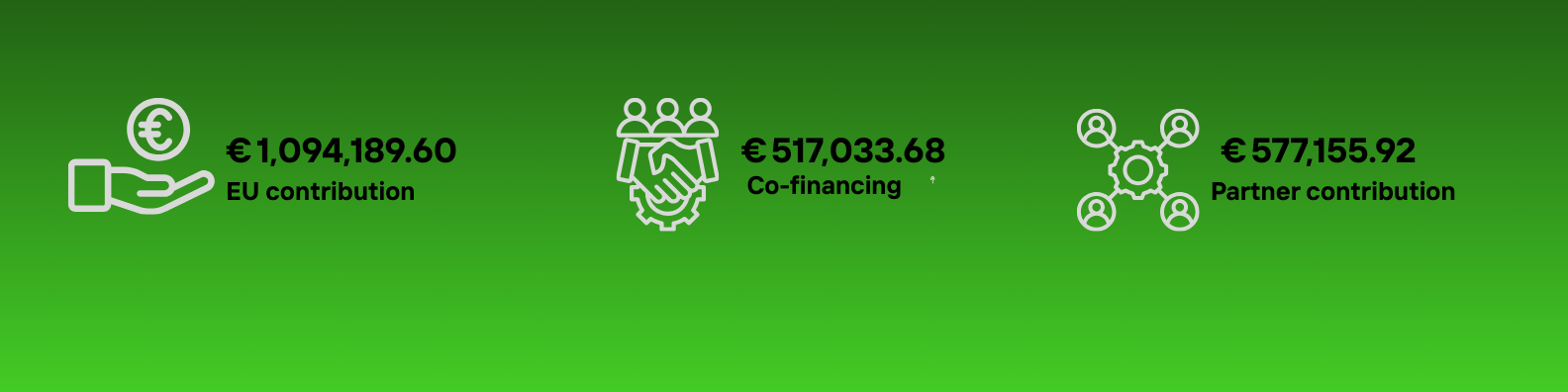
Interreg Meuse–Rhine (NL–BE–DE) programme, with a total eligible budget of
€2,283,626. This amount includes co-financing contributions from the
Ministry of Economic Affairs, Innovation, Digitalization and Energy of North Rhine-Westphalia, the
Walloon Region (Belgium), and the
Ministry of Economic Affairs of the Netherlands.
For more informationPFAS-resolve